Preventive vs. medical nutrition benefits: why it matters
Preventive vs. medical nutrition benefits explained: how the same session routes to $0 coverage or a deductible-driven claim, and how to verify which.
 By Javier Alvarez · 5 min read
Two clients. Same payer. Same 60-minute follow-up, same CPT code. One pays $0 and has unlimited visits. The other owes a $45 copay against a $2,000 deductible and has six visits a year. Nothing about the care differed. The claims took different roads inside the plan.
That road is the benefit routing: preventive or medical. It's the most consequential fork in nutrition billing, decided largely by your diagnosis coding, and most denied-then-confused situations trace back to it. Once you understand this one distinction, patient bills stop being surprises and your verification calls get much sharper.
The two routes
Preventive benefits exist because the ACA requires most non-grandfathered plans to cover certain preventive services without cost-sharing. Nutrition counseling frequently qualifies, commonly tied to Z71.3 (dietary counseling and surveillance) and related wellness codes. When a claim routes preventive, the typical pattern is:
- $0 patient cost-share: no copay, no deductible
- Sometimes generous or even unlimited visits, depending on the plan
- Often no referral requirement
Medical benefits are the plan's standard coverage machinery: a covered medical diagnosis (E11.9 diabetes, E66.9 obesity, N18.x CKD, and so on) drives coverage, and the plan's typical cost-sharing applies: copays, coinsurance, deductible. Visit limits are usually explicit, and referral or medical-necessity requirements are more common.
Neither route is better across the board. Preventive is usually better for the patient's wallet; medical is the only route available when the plan's preventive benefit excludes nutrition or the diagnosis picture doesn't fit. The problem is not knowing which road your claim will take.
Same session, different outcome
Here's what trips practices up: the payer routes the claim based on what's on it, not on what happened in the room. A follow-up billed as 97803 with Z71.3 primary may process preventive at $0; the identical session billed with E66.9 primary may process medical, hit the deductible, and generate a patient bill.
And payers differ sharply on the mechanics:
- Some require Z71.3 primary for preventive routing.
- Some reject Z71.3 as a primary diagnosis entirely and route preventive processing other ways.
- Some route based on the combination of diagnosis, provider specialty, and plan provisions you can't see from the outside.
There's no universal rule, so "check the payer's policy" is the actual method here. Our guides to ICD-10 codes for dietitians and CPT codes cover the coding side in detail.
Side by side
| Preventive route | Medical route | |
|---|---|---|
| Patient cost | Often $0 (no copay, no deductible) | Copay/coinsurance; deductible commonly applies |
| Driving dx codes | Z71.3 and wellness codes (payer-specific) | Medical dx: E11.9, E66.9, N18.x, etc. |
| Visit limits | Sometimes generous or unlimited; plan-specific | Usually a stated annual cap |
| Referral | Frequently not required | More often required or tied to medical necessity |
| When it applies | Plan covers nutrition as ACA preventive care | Covered medical diagnosis + plan medical policy |
| Common failure mode | Wrong dx order → routes medical → surprise bill | Missing referral / non-covered dx → denial |
Finding the routing during verification
The verification call is where you learn the route, if you ask the right questions. These are the ones that matter (the full sequence is in our insurance verification call script):
- "Is nutrition counseling covered under the preventive benefit, for example billed with Z71.3, and at what cost-share?"
- "Which diagnosis codes qualify for preventive routing, and does the plan require or exclude Z71.3 as primary?"
- "If billed under the medical benefit, what's the cost-share, and which diagnoses are covered?"
- "Are visit limits different between the two benefits, and how many visits remain under each?"
- "Is a referral required under either route?"
Record the answers per route, not blended. A log that says "covered, $20 copay" without saying which benefit is half a verification. Standard electronic eligibility checks often return the plan and cost-share but miss the preventive-routing detail. Phone questions (or automated verification that asks them) fill that gap. Ask about referral requirements separately for each route, because assuming the preventive answer applies to the medical route is a common denial cause.
Talking to patients about it
The $0-vs-copay confusion is a patient-relations problem as much as a billing one. A patient told "your insurance covers nutrition at 100%" who then receives a deductible bill feels misled, and your front desk absorbs that conversation.
Set expectations in one honest paragraph at intake: "Your plan covers nutrition counseling two ways. Visits that qualify as preventive typically cost you $0. Visits processed under your medical benefit apply your copay and deductible. Which way a visit processes depends on your plan's rules and the diagnosis involved. We've verified your specific benefits and here's what we found." Then share the verified numbers for both routes. Patients accept cost-share; they don't accept surprise.
This also helps on the copay collection side: you can't collect correctly at time of service if you don't know which route the claim will take.
The denial pattern when routing goes wrong
Misrouted claims produce a recognizable cluster:
- Patient-responsibility surprises: claim processed medical, deductible applied, patient billed for a session they expected free.
- Denials for non-covered diagnosis: Z71.3 sent primary to a payer that excludes it as primary, or a medical claim sent without a qualifying diagnosis.
- Visit-limit denials: preventive visits assumed unlimited when the plan caps them, or medical-route visits exhausted while preventive allowance sat unused.
- Referral denials: the medical route needed a referral the preventive route didn't, and no one checked both.
When it happens, the fix is usually a corrected claim with the routing-appropriate coding, or an appeal backed by your verification notes. The broader playbook is in our guide to nutrition claim denials. But every one of these is cheaper to prevent than to work: five extra verification questions versus thirty days of claim rework.
Check it per plan, every year
You check preventive vs. medical per plan, per year, because the routing lives in plan documents that change at renewal. The practices that never get burned treat routing as a standard verification field, log it per route, code deliberately to match, and re-verify at plan renewal.
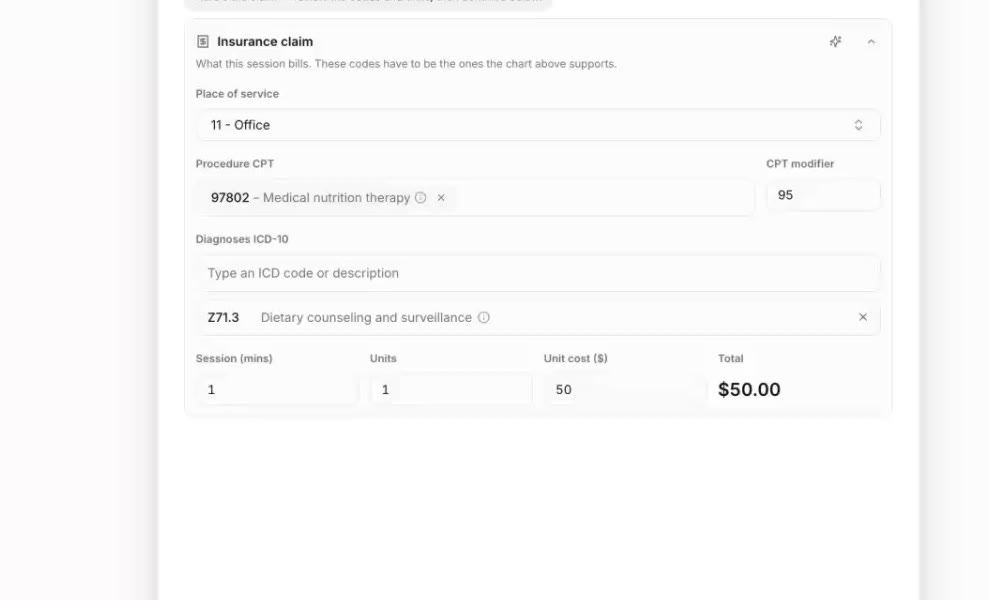
Duo Practice runs eligibility checks through your own Claim.MD account and drafts each claim's diagnosis codes from the session, so you can match the coding to the route you verified before the claim goes out. Try Duo Practice free
Frequently asked questions
Why did my patient get a bill when I was told nutrition counseling was covered at 100%?
Most often the claim routed to the medical benefit instead of the preventive one, usually because of the diagnosis codes used, their order on the claim, or plan rules about which codes qualify as preventive. When cost-share applies, the patient sees a copay or deductible amount they were told they would not owe. Verifying the exact preventive routing rules before the first session prevents this.
Does Z71.3 always trigger preventive routing?
Not on all plans. On many commercial plans, Z71.3 triggers preventive routing, but others don't recognize it that way. Some payers require Z71.3 as the primary diagnosis for preventive coverage, others reject it as primary, and some use different criteria entirely. Always confirm your specific payer's Z71.3 rules during verification.
Part of Coverage & benefits.