How to get physician referrals as a dietitian (+ templates)
How to get physician referrals as a dietitian: who to target, copy-paste outreach letter templates, and the report-back loop that keeps referrals coming.
 By Javier Alvarez · 5 min read
In a full nutrition caseload, clients rarely come from Instagram. They usually come from two or three physician offices that send patients every week, for years.
Physician referrals are the highest-lifetime-value channel in private practice nutrition, by a wide margin. Referred patients arrive pre-qualified (a doctor told them they need you), insurance-covered (they come with a medical diagnosis that supports coverage), and recurring (chronic conditions mean long care plans and re-referrals). What you're scheduling is a warm handoff from a doctor the patient already trusts.
Yet many RDs never build this channel, because "marketing to doctors" feels awkward. Physicians want somewhere reliable to send these patients. Most of them don't know a dietitian who makes it easy. The system below fixes that.
Who actually refers
Target by condition overlap, not proximity:
| Specialty | Why they refer |
|---|---|
| Primary care (PCPs, NPs, PAs) | Highest volume: prediabetes, diabetes, hypertension, obesity, high cholesterol |
| Endocrinology | Diabetes, thyroid, PCOS; nearly every patient is a nutrition candidate |
| Gastroenterology | IBS, celiac, IBD, fatty liver; diet is half the treatment plan |
| OB/GYN | Gestational diabetes, PCOS, prenatal nutrition |
| Bariatric surgery | Programs require pre- and post-op nutrition care |
| Nephrology | CKD: Medicare covers MNT for non-dialysis CKD with referral |
Start with 10 to 15 offices within your service area (or licensed telehealth reach) whose patient population matches your niche.
What physicians need before they'll refer
Physicians protect two things: their time and their reputation with patients. To refer confidently, they need:
- A one-step referral path. One fax form or one scheduling link. If referring to you takes their front desk more than 60 seconds, it won't happen twice.
- Insurance clarity. "Which plans do you take?" is the first question every office asks, because "the dietitian we sent you to is out of network" lands on their desk as a complaint. List your in-network payers explicitly.
- A feedback loop. A short note after the initial visit tells them the referral worked and you're a real colleague. This single habit separates the RDs who get one referral from the ones who get one a week.
For Medicare patients this is more than courtesy: a physician referral is required for MNT coverage, so the referral relationship is literally the billing pathway. The full requirements are in our Medicare MNT billing guide.
The outreach sequence
Step 1: the intro letter (or fax). One page, skimmable, with a referral form attached. Template below.
Step 2: the visit or follow-up fax (1 to 2 weeks later). Drop by with the same one-pager and referral pads, and ask for two minutes with the office manager, not the physician. The front desk decides where referrals actually go. If in-person isn't feasible, re-fax with a short cover note.
Step 3: the follow-up (2 to 3 weeks later). A brief call or fax: "Checking in. Do you have patients with [condition] who need nutrition support? Here's the form again." Most channels open on touch two or three, not touch one.
Then the compounding step: after every referred patient's first visit, send the report-back letter (template two). That letter is the marketing.
Template 1: Intro letter
[Your Practice Letterhead]

Dear Dr. Rivera,

I'm Jamie Okafor, RD, a registered dietitian in private practice at
Meadowbrook Nutrition, specializing in diabetes and prediabetes care.
I'm writing to introduce my practice as a resource for your patients
who need medical nutrition therapy.

Patients I can help: type 2 diabetes, prediabetes, obesity, hypertension,
and high cholesterol. I provide structured care plans (typically 3-6
visits) with measurable goals, in office and via telehealth.

Insurance: I am in-network with [Payer A], [Payer B], and Medicare.
Medicare covers MNT for diabetes and chronic kidney disease with your
referral, typically at no cost to the patient.

To refer: fax the attached form to (555) 010-0000, or have your patient
call (555) 010-0001. We contact every referred patient within one
business day and verify their benefits before the first visit.

After the initial visit, I will send you a brief summary of the
assessment and nutrition care plan, and progress updates during care.

Thank you for considering my practice for your patients.

Sincerely,
Jamie Okafor, RD, LDN
NPI: 0000000000
(All names and numbers above are fictional placeholders. Replace them with your own.)
Template 2: Post-visit report-back letter
[Your Practice Letterhead]

Re: [Patient Name], DOB [00/00/0000]
Date of initial visit: [Date]

Dear Dr. Rivera,

Thank you for referring [Patient Name] for medical nutrition therapy.

Assessment summary: [1-2 sentences: relevant intake findings, e.g.,
current eating pattern, weight history, labs reviewed, readiness].

Nutrition diagnosis: [PES-style statement or brief plain-language
equivalent].

Plan: [Care plan: visit frequency, key interventions, patient goals].
I have scheduled follow-ups every [X] weeks for [N] visits.

I will send a progress update after visit [N] or sooner if clinically
indicated. Please contact me with any questions or additional history.

Sincerely,
Jamie Okafor, RD, LDN
Phone: (555) 010-0001 · Fax: (555) 010-0000
(Fictional placeholders. Adapt to your documentation style and obtain patient consent for information sharing per your policies.)
The report-back loop keeps referrals coming
That second letter does a lot. The physician sees their referral was handled professionally, so they refer again. The progress updates keep your name on their desk without any "marketing." When the patient needs a new referral for continued Medicare coverage, the physician already has your fax on file. And your documentation for the letter is the same clinical note that supports your claim: one document, three jobs.
Slow charting quietly kills referral channels. If writing the report-back letter takes 30 minutes per patient, you'll stop sending them, and the channel decays. Practices that automate documentation keep the loop running at zero marginal effort.
Track your sources
Add one field to your intake form: "Who referred you?" Review it monthly.
Within a quarter you'll know which two offices deserve a thank-you visit and which ten never converted, and you can redirect your outreach accordingly.
Referral sources follow a power law; feed the top of it.
And make sure the intake process itself doesn't leak referrals. A referred patient who hits a clunky intake and scheduling flow before their benefits are verified is a referral you paid for and lost.
Build the list this week, send ten letters, and start the loop. Six months from now, two of those offices will be sending you patients every week.
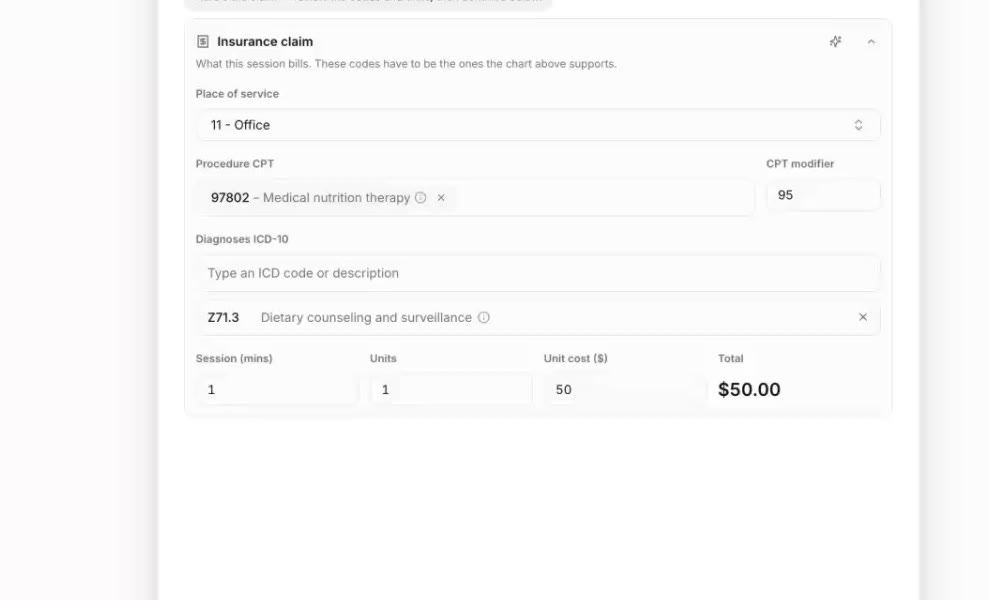
Duo Practice records the visit and drafts the clinical note that both your report-back letter and your claim need, then drafts the claim for you to review and submit. Eligibility checks for each referred patient run through your own Claim.MD account.
Frequently asked questions
Which physicians refer the most patients to dietitians?
Primary care physicians send the highest volume, followed by endocrinologists (diabetes, thyroid, PCOS), gastroenterologists, OB/GYNs (gestational diabetes, PCOS, prenatal nutrition), and bariatric surgeons whose programs require nutrition care. Nurse practitioners and physician assistants in these practices often initiate referrals too.
Do patients need a physician referral to see a dietitian?
For Medicare MNT, yes: a physician referral is always required. Many commercial plans do not require one, but some do, and a documented referral with a medical diagnosis often strengthens coverage and claims. Verify each plan's requirement during the benefits check.
Part of Medicare MNT.